Several criteria, few of which are widely accepted, have been proposed to define what constitutes an organism. Among the most common is that an organism has autonomous reproduction, growth, and metabolism. This would exclude viruses, even though they evolve like organisms.
There are 3 recognized domains, or broadest classification of organism. These are Bacteria, Archaea, and Eukarya. In the simplest case, an organism can be a bacteria, a DNA molecule containing genetic information wrapped in a protective plasma membrane.
In biology, an organism is often defined as a contiguous living system capable of performing all basic life functions. It maintains homeostasis—an internal balance despite external changes. It carries out metabolism—the sum of all chemical reactions necessary for survival.
Both archaea and bacteria are prokaryotic organisms whereas Eucarya, as the name suggests, includes all the eukaryotes. The scientific study of all organisms is called biology.
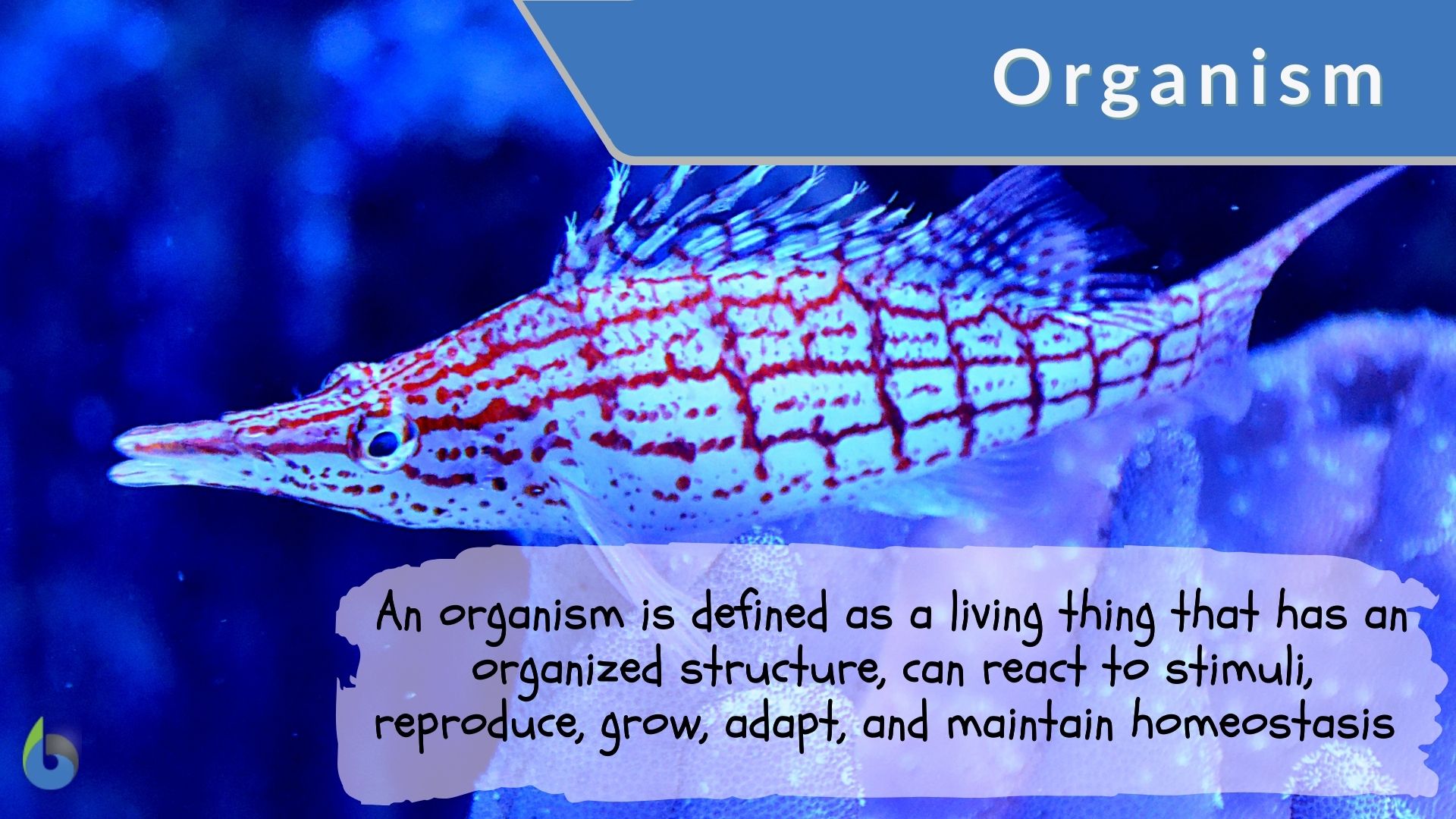
Organisms can be defined as a living thing, a unique, complex organization exhibiting the following significant characteristics: Can react to stimuli: Organisms can sense the external factors and respond accordingly. Can grow: Organisms can increase the mass of an individual.
: something having many related parts that function together as a whole. : an individual living thing that carries on the activities of life by means of organs which have separate functions but are dependent on each other : a living person, plant, or animal.
Organisms can be unicellular or multicellular. They are scientifically divided into five different groups (called kingdoms) that include prokaryotes, protists, fungi, plants, and animals, and that are further subdivided based on common ancestry and homology of anatomic and molecular structures.
Amoebae and bacteria are single-celled organisms. We do not understand the notion of a "psychological" theory that is "nonindividualistic"; the individual organism is psychology's focal level of analysis. In multicellular organisms different patterns have been reported.
Organisms are the fundamental units of life, diverse in form and function, inhabiting every corner of our planet. From the simplest bacteria to the most complex human, organisms play vital roles in maintaining ecological balance, supporting life cycles, and driving biological innovation.
Organisms, the fundamental units of life, can be broadly categorized based on their cellular structure and organization. This classification provides insights into the evolutionary complexity and functional capabilities of different life forms.